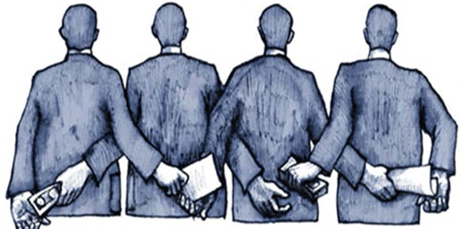
If you thought the American people were the customers of the U.S. Food and Drug Administration (FDA), you were wrong
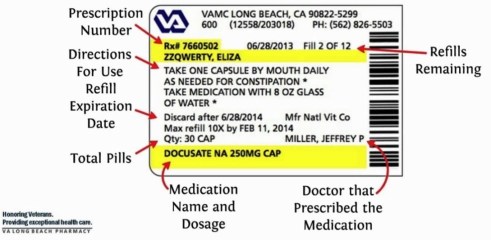 A good example: the bottle from the pharmacy containing your prescription pills. Look for the country of origin, You won’t find it, even though it’s on just about every other item you purchase.
The Government Accountability Office (GAO) reported this month that 75% of our pharmaceutical inputs (API) and 54 percent of finished doses come from outside our country.
Guess who is the biggest culprit and beneficiary of FDA regulation rules?
A good example: the bottle from the pharmacy containing your prescription pills. Look for the country of origin, You won’t find it, even though it’s on just about every other item you purchase.
The Government Accountability Office (GAO) reported this month that 75% of our pharmaceutical inputs (API) and 54 percent of finished doses come from outside our country.
Guess who is the biggest culprit and beneficiary of FDA regulation rules?
 Foreign inspections surpassed domestic ones in 2014-15 for the first time, many of those occurring in India and China. But since 2016, inspections have declined due to staffing issues created by Congress and the bureaucracy. In 2020, only inspections deemed “mission critical” were ordered.
The GAO report said long-known problems included giving foreign labs as long as 12 weeks to be ready for inspectors, and nearly no fines or other punishments, including import bans for labs with warning letters from the FDA.
From March 2020 to January 2021, FDA conducted only three foreign mission critical inspections – just one in Canada, Germany, and India. There were no inspections in China. In each of the prior two years, the agency conducted more than 900 foreign drug factory inspections.
During the last two decades, cheap labor costs and heavy regulation have driven the majority of American pharmaceutical manufacturers to move operations overseas to increase profits and avoid FDA inspections. As a result, thousands of talented American scientists have lost their jobs. Promoting STEM has taken a backseat to investor greed.
Jeff Fortenberry, (R-NE) said the current foreign inspection program with three-month warnings gives American labs an uneven playing field.
Foreign inspections surpassed domestic ones in 2014-15 for the first time, many of those occurring in India and China. But since 2016, inspections have declined due to staffing issues created by Congress and the bureaucracy. In 2020, only inspections deemed “mission critical” were ordered.
The GAO report said long-known problems included giving foreign labs as long as 12 weeks to be ready for inspectors, and nearly no fines or other punishments, including import bans for labs with warning letters from the FDA.
From March 2020 to January 2021, FDA conducted only three foreign mission critical inspections – just one in Canada, Germany, and India. There were no inspections in China. In each of the prior two years, the agency conducted more than 900 foreign drug factory inspections.
During the last two decades, cheap labor costs and heavy regulation have driven the majority of American pharmaceutical manufacturers to move operations overseas to increase profits and avoid FDA inspections. As a result, thousands of talented American scientists have lost their jobs. Promoting STEM has taken a backseat to investor greed.
Jeff Fortenberry, (R-NE) said the current foreign inspection program with three-month warnings gives American labs an uneven playing field.
Human Drugs regulatory activities account for 33 percent of FDA’s budget; 65 percent of these activities are paid for by industry user fees, boasts the FDA website.No surprise: the 15,000 employees of the FDA might act like representatives of Big Pharma, when it comes to telling the public what it needs to know, and what the drug companies prefer kept secret.
A good example: the bottle from the pharmacy containing your prescription pills. Look for the country of origin, You won’t find it, even though it’s on just about every other item you purchase.
The Government Accountability Office (GAO) reported this month that 75% of our pharmaceutical inputs (API) and 54 percent of finished doses come from outside our country.
Guess who is the biggest culprit and beneficiary of FDA regulation rules?
China has aggressively under-priced its products to such a point that it has now made itself the exclusive supplier for critical ingredients for dozens of crucial pharmaceuticals, including: antibiotics, diabetes and heart-disease drugs, plus high-blood pressure medicine, according to testimony given at a 2019 U.S.House energy and commerce hearing. Even India is dependent on China for ingredients. Essentially all generic drugs – which account for at least 90 percent of the drugs dispensed from pharmacies — rely on raw pharmaceutical ingredients originating in China.The FDA is responsible for inspecting those foreign facilities, but they have not inspected more than a handful in nearly a year. Compare that to 2019 when 977 foreign drug sites were examined.
Foreign inspections surpassed domestic ones in 2014-15 for the first time, many of those occurring in India and China. But since 2016, inspections have declined due to staffing issues created by Congress and the bureaucracy. In 2020, only inspections deemed “mission critical” were ordered.
The GAO report said long-known problems included giving foreign labs as long as 12 weeks to be ready for inspectors, and nearly no fines or other punishments, including import bans for labs with warning letters from the FDA.
From March 2020 to January 2021, FDA conducted only three foreign mission critical inspections – just one in Canada, Germany, and India. There were no inspections in China. In each of the prior two years, the agency conducted more than 900 foreign drug factory inspections.
During the last two decades, cheap labor costs and heavy regulation have driven the majority of American pharmaceutical manufacturers to move operations overseas to increase profits and avoid FDA inspections. As a result, thousands of talented American scientists have lost their jobs. Promoting STEM has taken a backseat to investor greed.
Jeff Fortenberry, (R-NE) said the current foreign inspection program with three-month warnings gives American labs an uneven playing field.
The 12-week period is enough time to for labs to clean up their act, This is an uneven playing field for those trying to manufacture in the US. Why has so much moved overseas? To capitalize on low wages and lackluster labor standards in part, but I wonder if US law is encouraging it? Made in America should apply more than to just our military. We are inordinately dependent on API and final products from overseas, and I’d like to see Made in America on our prescription drug products.
* * * *
Let’s examine one drug (that I take daily) Xarelto.
Xarelto sold in the U.S. has its active ingredient made in Germany. The finished product is manufactured in Puerto Rico (USA), according to Pharmacy Checker.
A drug’s raw ingredients (the actual chemical in the medicine, as well as the binders, fillers and colors) may all come from different countries. The Active Pharmaceutical Ingredient (API) may be made in China, while the coloring agent may come from India and the fillers (other inactive ingredients) are from Thailand.
What is the country of origin? Is it China where the API was made, or maybe Brazil or Thailand, where the final dosage form is created and stamped?
No matter where the drug we take is made, we pay more. Xarelto’s average list price is $552 a month in our country, versus the lowest international price of $60. Who says Americans don’t overpay for drugs?
* * * *
Mary Denigan-Macauley, the director of healthcare and private markets at the Government Accountability Office (GAO), seems slightly concerned about lack of inspections and country of origin labels.“I don’t know if the FDA has done that, but it would certainly help to enforce compliance,” she said.When asked about country of origin labeling, she had no comment, and claimed she has done no research on whether that would work. The Coalition for a Prosperous America (CPA), which lobbies for fair trade, said there is no excuse for not labeling a drug’s origin:
It is amazing to us that you can determine at a glance the country where your shirt, pants or shoes are made. Buy fruit in the supermarket and if it comes from another country you will be informed. What’s more, if you buy juice, milk or any canned food you will find the identification code and an expiration date somewhere on the label. If the food is spoiled or contaminated, the USDA and the FDA can track it with the lot number on the label.CPA’s Kenneth Rapoza, said generics share the same labeling flaw:

 You can fool nearly all the people...
Great piece. Except the FDA has well over 19,000 people and climbing every week under Buy-den, not counting contractors, maintenance, IT and part-time employees. FDA employees were mostly all worthless, do-nothing drones before they were all “working” form home. As of this writing, they are all still “working” from home and TWICE as worthless!!
Every single FDA employee is a lazy do-nothing swamp liberal, from the top down. Every. Single. One.
LikeLike